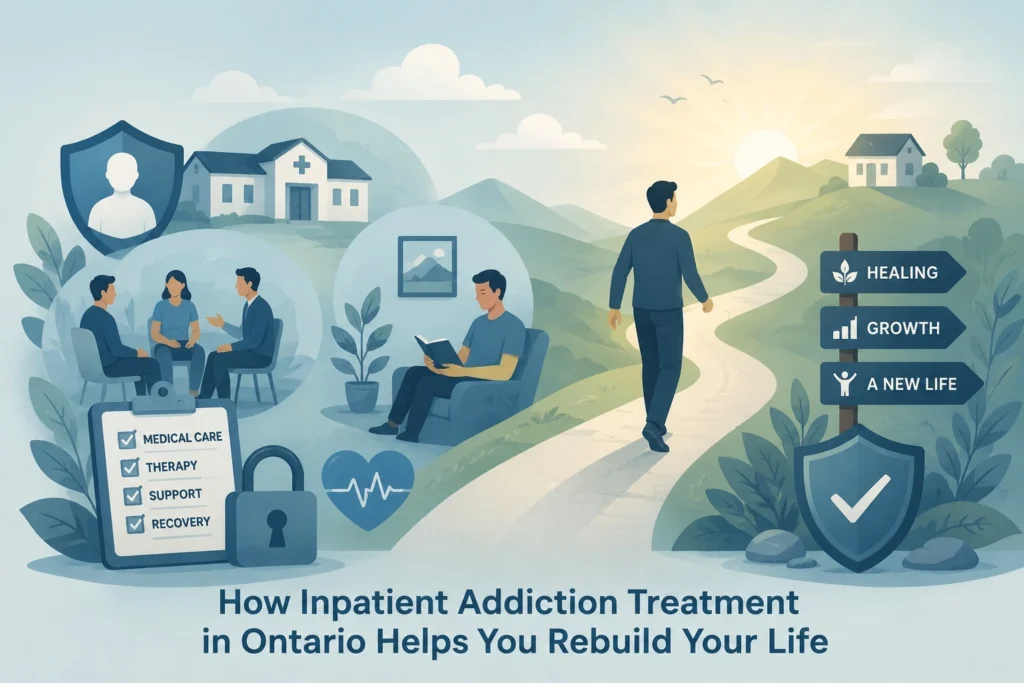
Addiction doesn’t come alone either. Along with the substance abuse could come anxiety, depression, relationship problems and feelings of hopelessness. If the willpower isn’t enough anymore, inpatient addiction treatment Ontario centers offer a solution, which means that one will be able to find healing in the right environment.
It’s not a trend or a box to check. It’s about providing yourself with the room and resources to re-embrace life
What Makes Inpatient Addiction Treatment in Ontario Different
While outpatient programs might work for some people, the majority of people are overwhelmed by stresses and daily triggers as well as accessibility of addictive substances.
Inpatient addiction treatment Ontario facilities come in handy in such cases. They take you out of that environment completely. You’re living at the center with all clinical and counseling staff who are aware of your problems and challenges.
It’s just like a computer, which works too many programs at once and needs to be rebooted.
Why Location Matters: Private Rehab Wasaga Beach
The location of treatment facilities is crucial. The private treatment facility at Wasaga Beach offers something that most other clinical facilities lack: nature, silence, and isolation from the hectic environment.
Think of opening your eyes surrounded by the view of lakes instead of the clinical walls of hospitals. This alone will provide you with an environment where you will feel safe to talk in your therapeutic sessions.
Privacy is another concern that individuals consider before seeking professional help. Often, many individuals do not go to clinics because they do not want any judgments from their families or co-workers. In a private rehab Wasaga Beach facility, one can focus solely on getting better without having to worry whom he/she may run into.
Addressing the Root Cause, Not Just the Symptoms
Many individuals realize this only once they have already gone through treatment. They need to know that addiction is often a way out, but not a problem itself.
This is why inpatient treatment for anxiety and depression has become so important in today’s addiction treatment in Ontario. Someone who has been self-medicating undiagnosed anxiety for years will not be cured by just stopping the drug.
A client may come in thinking that their only issue is with alcohol. But after a few weeks of treatment, it becomes apparent that the drinking was actually caused by untreated panic attacks.
The best inpatient addiction treatment Ontario programs include addiction counselling and mental health services, which means both are addressed. Otherwise, you’re just fixing one leak while another is leaking.
Culturally Safe Care: Indigenous-Informed Addiction Treatment Ontario
However, recovery cannot be universal and therefore should not be approached like that. The process of healing could necessitate cultural identity, community support, and historical perspective on behalf of Indigenous clients.
Addiction treatment programs for Indigenous peoples in Ontario understand this very well. As opposed to a general Western approach to the treatment, they use cultural practices and healing.
It is significant because trust is crucial to recovery. When a client feels culturally recognized, he or she is much more willing to engage in the program and talk about their issues.
What a typical day looks like
One of the most overlooked aspects of inpatient care is structure. People who come into treatment have been in chaos for months, sometimes years.
The common things one may do would be morning check-in with the medical professionals, and individual counseling sessions. The afternoon time would be spent in group counseling where the clients can learn from other people and learn that they are not the only ones in the same boat.
In the evening relaxation activities, journaling or peer support sessions can be organized. This rhythm restores discipline and provides a foundation for the brain.
Developing skills that last after treatment
The objective is not merely to live in a facility for 30 or 60 days. It’s going away with tools that work in real life.
Coping methods for cravings, stress and emotional triggers are learned by the therapists. Clients learn to develop communication skills that help mend relations with their families and friends.
Aftercare planning is also crucial. The risk of relapse is high if there is no plan for life after discharge. This is why good programs plan for transition long before the day of discharge.
Who is a good candidate for inpatient care?
While not everyone requires inpatient treatment, there are some clear indicators that point to inpatient treatment. A more intensive level of treatment is required if there is no success in the outpatient treatment or the mental health problems are more severe.
If the circumstances at the place where an individual lives are not good for sobriety, it can be necessary to take some time off for the sake of staying sober..
Final Thoughts
Addiction recovery is not a question of one’s willpower but requires a proper setting, adequate assistance, and comprehensive treatment. The inpatient addiction treatment Ontario programs are what everyone needs in order to recover successfully.
Be it a tranquil escape from the daily grind of modern living, a special inpatient treatment for anxiety and depression, or an approach that recognizes the culture one comes from, the right program makes all the difference.
In case you or your loved one is in danger, there is hope for recovery.Contact specialists like Breakthrough Recovery to learn more about the possibilities and take the first step towards a healthy and secure future.