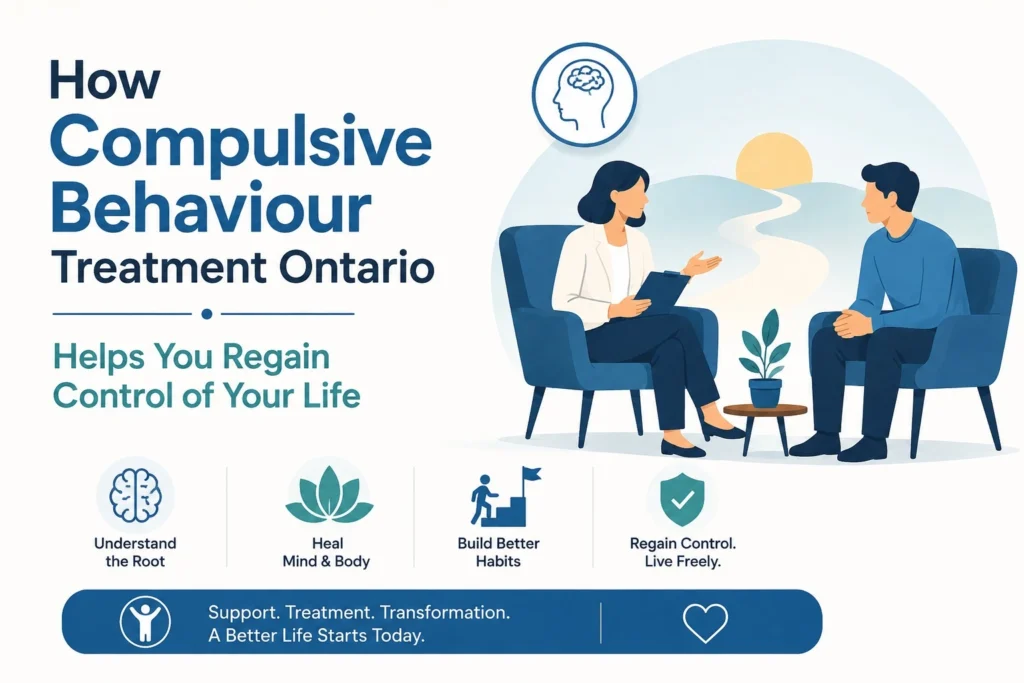
Perhaps it was a small one. Some late night leisure gaming. A wager made for no particular reason “just for fun. One day you awoke and discovered that you weren’t living your life, but your life was living you. If that’s you, you’re not alone, you are not broken, you are just wrong. compulsive behaviour treatment Ontario programs are in existence just for such scenarios, in which many people are compelled to engage in a habit and in which they need to obtain solid support to drop to a better place.
Compulsive behaviours are not always what is expected. No needle, no bottle – the stuff is not clearly visible. Rather, a sense is developing that one should not stop when one desires it not to stop. That is why behavioural addictions are so difficult and significant to deal with properly.
What Counts as a Compulsive Behaviour?
Compulsory behaviors consist of behavioral behaviors which a person engages in despite negative outcomes. But, like addictive substances, the reward circuits of the brain that become hijacked on willpower to use can be hijacked when trying to quit.
Common examples include:
- Compulsive gambling
- Excessive gaming
- Obsessional use of the internet, social media networks.
- Shopping addiction
- Compulsive sexual behaviour
These can all slowly creep up on relationships, money and mental well-being without anyone’s knowledge. A person that is made with a gambling addiction might stop eating, miss their work or miss family outings to play more. A person addicted to gambling may even exhaust saving accounts and claim that they are going to be able to “win it back. The only difference is that when people start drinking or using drugs their brains’ reward systems are shaped by these actions – it’s similar to how the brain is shaped by drugs.
Why Ontario Residents Are Seeking Structured Support
There has been a clear increase in the number of people seeking assistance for behavioural addictions in Ontario over the last few years. Part of this comes down to accessibility online gambling platforms and gaming systems are available around the clock, right from a phone. Therefore, the opportunity for compulsive patterns to develop has grown alongside the technology itself.
That’s why compulsive behaviour treatment Ontario clinics have turned to treating behaviours like substance use disorders with the same dedication. These are not just regular counselling sessions, these are evidence-based, systematically-designed programs that are designed to break the cycle and establish healthier patterns from the beginning.
Understanding Gaming Addiction Inpatient Treatment
Gaming addiction is commonly known as a “phase” and affects a lot of people, particularly children. For some it’s a very bad addiction which interferes with their education, their job, and their personal relationships.
Outpatient counselling can’t match gaming addiction inpatient treatment when it comes to distance from triggers. Having the brain removed from the clutter of consoles, screens and the daily routine associated with games gives it a true opportunity to reset.
Inpatient programs typically combine:
- Individual therapy to explore the root causes of the compulsion
- Group sessions where people share similar struggles
- Structured daily routines that replace screen time with purposeful activity
- Family involvement, since gaming addiction rarely affects just one person
Think of a teenager who has sat in his room for a few months playing video games for 10 to 12 hours a day. It’s not a matter of “cutting back” as it’s usually said, and very few people are successful in this when they try it on their own. A structured/inpatient setting eliminates the temptation and therapists focus on what is driving the behaviour underneath.
Gambling Addiction Treatment Ontario: A Growing Need
Gambling addiction has a particularly cruel pattern the highs feel bigger, and the losses feel more devastating, than almost any other compulsive behaviour. Gambling addiction treatment Ontario programs are built to address this specific dynamic.
Unlike gaming, gambling often comes with a financial trail that can spiral quickly. Credit card debt, loans from family, or even legal trouble can pile up before someone admits there’s a problem.In this regard, the treatment is often more than just behavioural therapy, and may also include financial counseling and family mediation.
A common treatment strategy would be:
- A preliminary investigation to gain a better understanding of the extent and background of the gambling problem.
- Challenge negative thinking, such as thinking that a big win is “due” to you (cognitive-behavioural therapy (CBT))
- Since the urge to gamble is omnipresent, a gambling addiction can be triggered anywhere a lottery kiosk, a sports betting advertisement, or a simple poker evening with friends could be found, relapse prevention planning is a must.
- Working support groups for long term accountability.
For example, a compulsive gambler may truly think that they are “one win away” from solving all of their problems. CBT works to break down that thought pattern and put in a more grounded and realistic thought.
Why Inpatient Behavioural Addictions Treatment Works Better for Some
Outpatient support is effective for quite a few people, which is why it is not for everyone who needs to attend a residential program. For individuals with severe compulsions, however, outpatient behavioral addictions treatment is not as structured as inpatient treatment.
Here’s why it matters:
Removal from triggers.Retiring to the comfort of your own home when attempting to abstain from gambling or gaming will only make the habit more apparent. Inpatient treatment removes this access from you.
Round-the-clock support. Addictions don’t work 9 to 5. Training staff who can be available at 2 a.m. when cravings can be most intense is the key to making the difference between relapse and recovery.
Time to address underlying issues. A great deal of compulsive behaviors are associated with feelings of anxiety, depression, trauma or loneliness. Then a home setting allows therapists the time and space to go to the root cause and not treat the symptoms that are just on the surface.
Peer connection. It’s nice to be in a roomful of people who actually get the allure of a slot machine or the hit of a game notification. It eliminates shame and fosters accountability.
What to Expect From a Treatment Program
When you are thinking about compulsive behaviour treatment Ontario, it is helpful to have an idea of what the process entails.
A comprehensive intake assessment is generally the starting point of most programs. This is not just paperwork, it’s a discussion that aims to determine the extent of the behaviour, its underlying causes and any other mental health issues.
Treatment typically progresses from there to several stages:
- Stabilization (disruption of original impulse)
- Therapy is done to unravel the psychological understating of the behaviour.
- Development of skills to cope with stress, boredom or loneliness healthily.
- The aftercare plan, post-recovery is not recovery,
This final is more important than many realize. Leaving treatment without an aftercare program is like fixing up a house and leaving the front door open. The structure should be ongoing, albeit less intense to safeguard the work accomplished.
You Don’t Have to Figure This Out Alone
These compulsive behaviors can make a person feel very isolated – perhaps even embarrassed. But the reality is these are disorders that are known and treatable, not a reflection on you. Thousands of people have walked this path and emerged intact, with their lives, money and relationships intact.
If your days are being controlled by gaming, gambling, or any other behavior, it’s time to get a proper assessment. It could be outpatient counselling or an intensive residential program, compulsive behaviour treatment Ontario programs can be structured to fit you at your current level and help you turn your page.
You are not a failure if you haven’t finished, you are just going at your own pace baby steps. It’s important to discuss with a licensed treatment provider in Ontario such as Breakthrough Recovery the level of care that you need, outpatient or inpatient. You might get the talk you’ve been waiting for with this one.